
Where should a porta potty go on site?
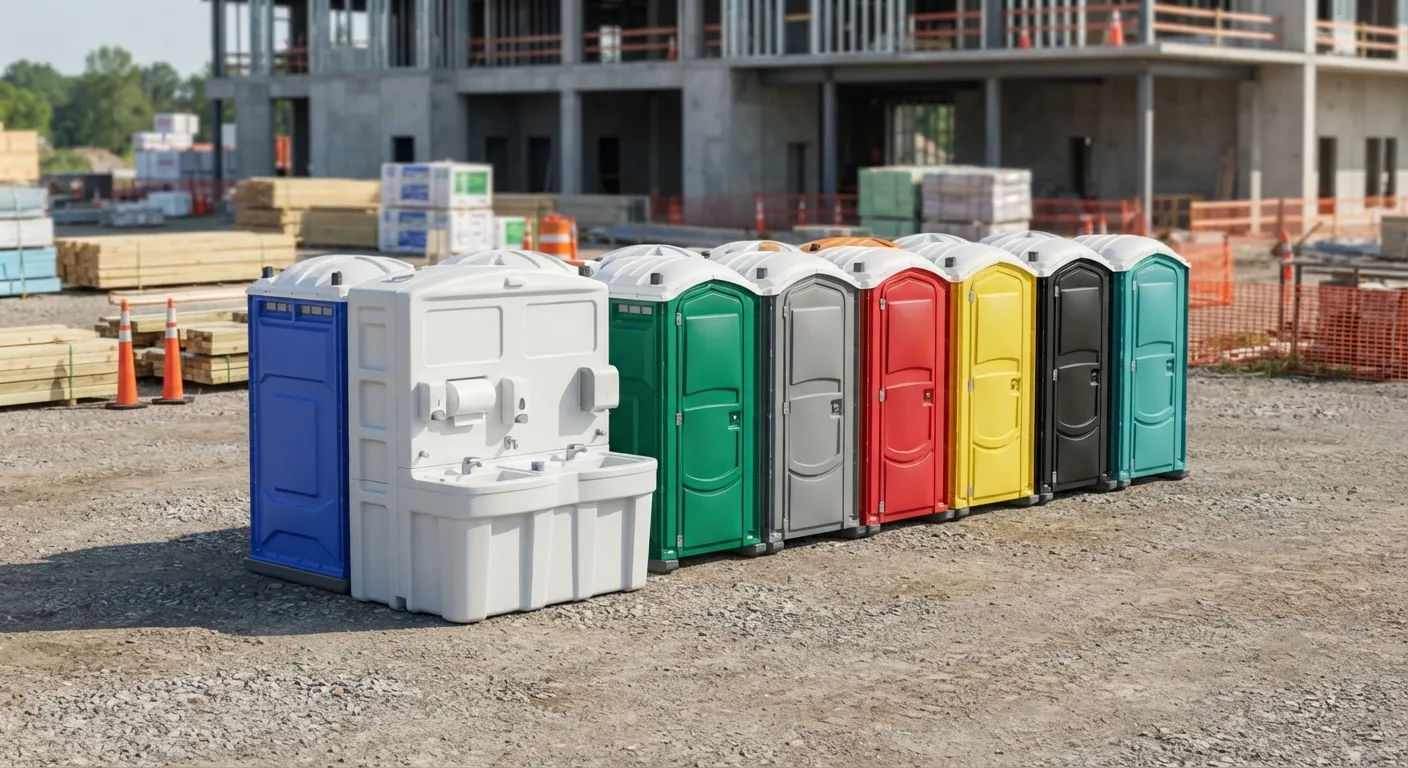
Pick level ground first. A standard unit runs about 44 by 48 inches on the ground and stands roughly 92 inches tall, so it needs a footprint clear of overhead branches, wires, and awnings. Keep the door swing unobstructed. If you're renting an ADA accessible porta potty, the accessible route to it needs a 36 inch minimum clear width under ADA Standards section 403.5.1, and the unit itself needs a 60 inch turning circle inside per ADA Standards section 304.3.1. That's not a suggestion, it's what makes the unit usable. On construction sites in Irvine, service crews also want a path wide enough for the pump truck to reach the tank without driving over landscaping or curbs. If you're clustering multiple units for an event, ADA Standards section 213.2 requires at least 5 percent of clustered single-user units to be accessible, never fewer than one. See our full ADA restroom requirements breakdown for the math on larger counts. For general guidance on quantities before you even think about placement, start with how many porta potties do I need.
Do I need a permit to place a porta potty in Irvine?
Placement in the public right of way, on a sidewalk, or in a street parking lane needs confirming with the city before delivery. We're not going to guess at a fee or a specific code here, because permit rules and costs vary by jurisdiction and change over time. If the unit sits entirely on private property, set back from the curb, permitting is usually simpler, but check first. This is the same logic that applies to dumpster placement permit costs: a roll-off dumpster parked on a street almost always triggers a different rule than one parked in a driveway, and dumpster permit requirements differ enough between cities that guessing costs you a fine. If you're unsure whether your Irvine address falls under a right-of-way rule, call the city planning or public works line before the truck shows up, not after. Our porta potty permit requirements page walks through what's typically asked, and dumpster permit requirements covers the roll-off side.
What ground conditions matter for placement?
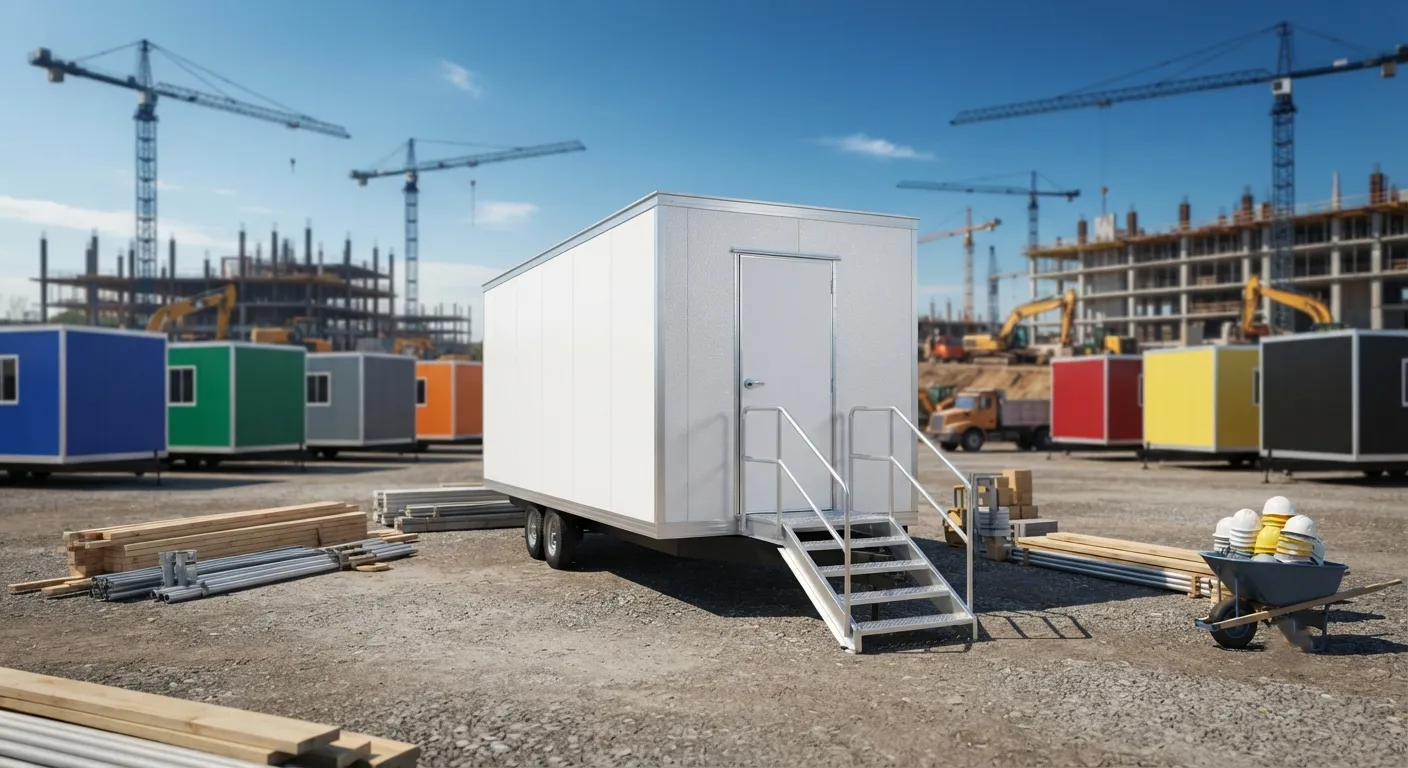
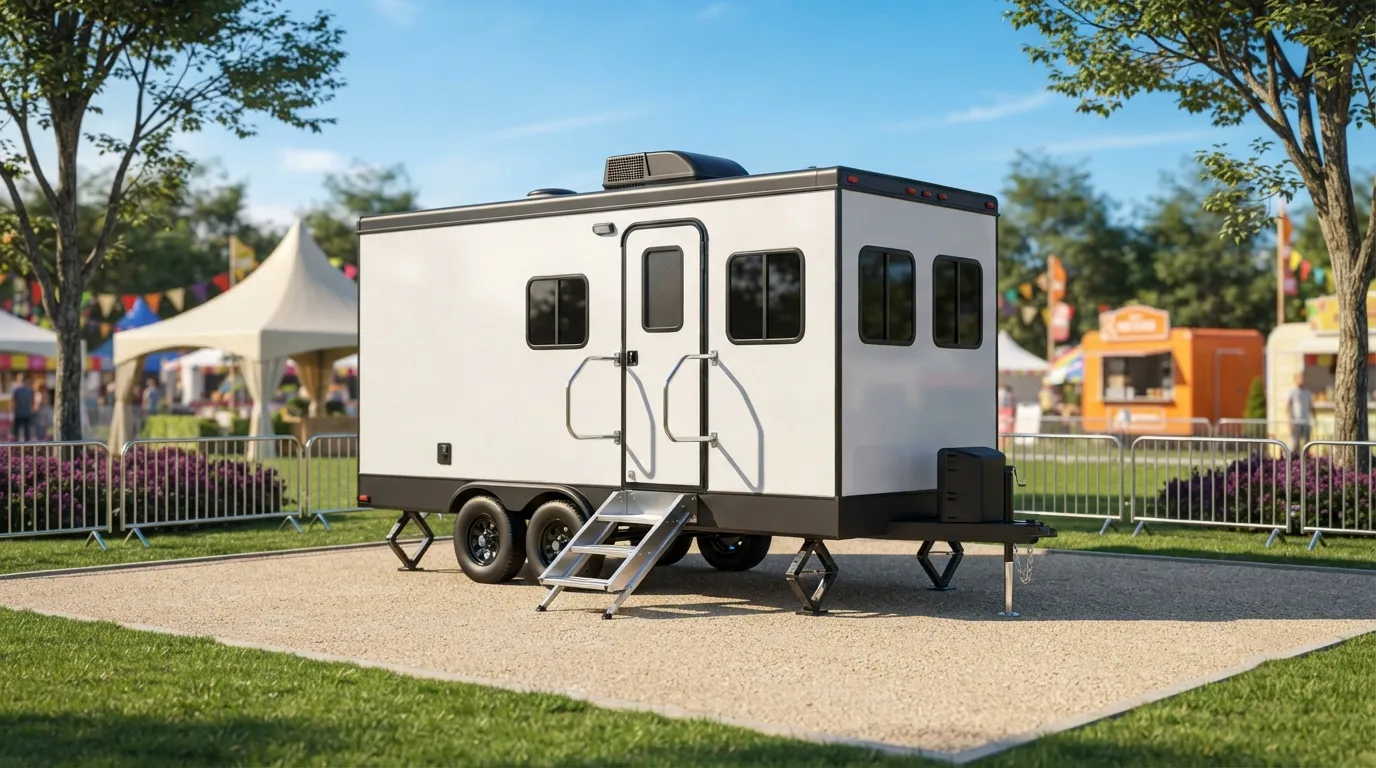
Flat and firm beats anything else. Soft dirt, mud, or a slope steeper than what ADA Standards section 405.2 allows for a ramp (1:12 maximum) creates problems for both stability and accessibility. Delivery trucks need clearance too: a roll-off delivery needs about 60 feet of straight clearance behind the truck to back in safely, and that same clearance logic applies loosely to portable restroom delivery vehicles working a tight Irvine lot. If you're placing a restroom trailer rental instead of a standalone unit, you'll need level ground plus power access, since most trailers run lighting and pumps off a generator or shore power. Keep units at least a few feet from any structure to leave room for service access, since a technician needs space to open the tank and swap it during a routine visit. ANSI/PSAI Z4.3 sets the baseline service interval at once weekly for up to 10 users across a 40 hour week, so plan placement with that truck route in mind, not just where it looks tidy on day one. Standard portable restroom rental units and deluxe flushable porta potty units both follow this same access rule.
How does placement affect handwashing and OSHA compliance?
Handwashing stations need to sit next to, or very close to, the toilet units they serve, not off in a corner of the lot. OSHA 1926.51(c) sets toilet counts for construction sites: 1 facility for 20 workers or fewer, then 1 toilet seat and 1 urinal per 40 workers as headcount climbs past that, and per 50 workers once you hit 200 or more. That ratio drives how many units you place and where you cluster them, since spreading them too far apart defeats the point. If your crew is applying paints, coatings, herbicides, or insecticides, OSHA 1926.51(f)(1) requires washing facilities for that specific work, separate from general sanitation. A handwashing station rental placed at the crew entrance covers this, and 29 CFR 1910.141(d)2 requires soap and towels or a hand-drying device at that station, not just hand sanitizer. If a unit needs an Ozark River portable sink replacement part, like a pump or faucet, get it swapped during a scheduled service run so the station doesn't sit out of commission. The same access thinking applies to a portable sink rental placed near a food vendor at an Irvine event.
Placement also touches your other rented equipment. A temporary fence rental around a cluster of units keeps foot traffic controlled at a festival or fair, and a storage container rental or mobile office trailer rental parked nearby should leave the same clearance for its own door swing, since a mobile office trailer replacement door still needs the frame square and the approach clear. None of this is unique to Irvine, but local sites in Irvine tend to be tighter than rural ones, so plan early. If you're managing a septic system instead of rented units, a residential tank is typically pumped every 3 to 5 years depending on size and household use, similar in spirit to how a placerville septic pumping service or any other regional provider schedules routine visits around access, not convenience.
How far from a building should a porta potty be placed?
There's no single fixed number, but keep it close enough for easy walking access, ideally under 100 feet, and far enough that odor and service trucks don't interfere with entrances. Check our porta potty rental cost page for how distance affects delivery fees.
Can I place a porta potty on a sidewalk in Irvine?
Sidewalk and right-of-way placement needs confirming with the city first. Rules vary by location and by whether the sidewalk is public or part of private frontage. Call before scheduling delivery to avoid a reschedule.
Do I need a permit for a dumpster placed in my driveway?
Usually simpler than street placement, but not automatic everywhere. Driveway placement on private property tends to avoid right-of-way permitting, though confirm locally. See dumpster permit requirements for what's typically asked.
How much clearance does a roll-off delivery truck need?
About 60 feet of straight clearance behind the truck for a safe backing approach. Tight urban lots in Irvine sometimes require repositioning parked cars or cones beforehand. Ask your driver during scheduling.
What happens if a unit is placed on uneven ground?
It can tip, leak, or become inaccessible for wheelchair users under ADA Standards section 302.1. Ask your delivery crew to level the site with blocking if the ground isn't flat. This matters most for ADA accessible porta potty units.
Next step
Get a delivery date
Tell us the address, the dates and the headcount. We size the order and confirm the route.